

How to Train New Employees
In today’s rapidly evolving workplace, the “sink or swim” method of onboarding has officially been retired. With a multi-generational workforce, a heavy reliance on AI-integrated tools, and the prevalence of hybrid work models, learning how to train new employees effectively is likely the single most important factor in long-term staff retention.
Effective training is no longer just about showing someone where the files are kept; it’s about cultural integration, technological fluency, and psychological safety. This guide provides a comprehensive roadmap for managers and HR professionals looking to modernize their training protocols., keeping the human-centric element firmly in place.
1. The Pre-Boarding Phase: Setting the Stage
Training doesn’t start on Monday morning at 9:00 AM. In a high-performing organization, training starts the moment the offer letter is signed, which is often referred to as “pre-boarding.”
• The Digital Welcome: Send a “Welcome Kit” that includes login credentials, a digital handbook, and a video message from the team.
• The Hardware Setup: Ensure all physical equipment (laptops, monitors, ergonomic chairs) arrives at the employee’s home or desk at least 48 hours before their start date. Nothing kills momentum like a new hire spending their first four hours on the phone with IT.
2. The 70-20-10 Rule of Modern Training
To understand the mechanics of how to train new employees, many industry leaders utilize the 70-20-10 framework. This model suggests that individuals obtain 70% of their knowledge from job-related experiences, 20% from interactions with others, and only 10% from formal educational events.
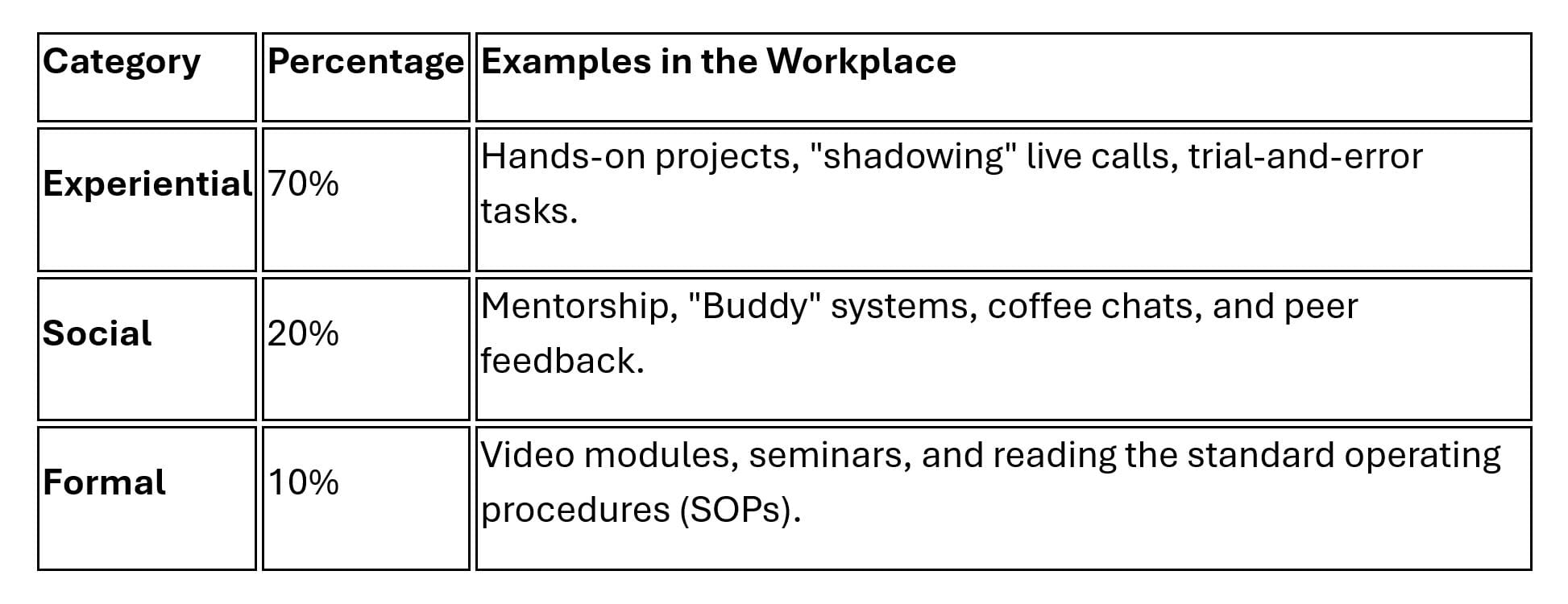
By balancing these three, you ensure the employee isn’t just “studying” their job, they’re actually doing it.
3. Essential New Employee Training Tips
If you want to accelerate the “time-to-productivity” for your new hires, consider these actionable employee training tips:
Embrace Micro-Learning
Avoid “Death by PowerPoint.” Attention spans today are shorter and information density is higher. Break your training into 5-to-10 minute “micro-modules.” Instead of a three-hour seminar on the CRM, provide five short videos that each cover one specific task (e.g., “How to Log a Lead”).
The “Buddy” System
Assign every new hire a “Buddy” who is not their manager. This creates a low-stakes environment where the employee can ask “dumb” questions — like how to use the coffee machine, or what are the unwritten rules of the Slack channel — without feeling like they are being judged or evaluated.
Leverage AI as a Co-Pilot
If applicable, your training should also include details on how to use company-approved AI tools. Show your new employees how the organization uses generative AI to draft reports or analyze data. This ensures consistency in how your team leverages the technology.
Focus on “Quick Wins”
In the first week, give the employee a task they can complete successfully. This builds confidence and gives them a sense of ownership immediately.
4. Structuring the First 30, 60, and 90 Days
A common mistake in learning how to train new employees is front-loading everything into the first five days. This leads to cognitive overload. Instead, phase the training more appropriately:
Days 1–30 (Clarity)
Focus on the “Who” and “Why.” Who are the stakeholders? Why does this role exist? The goal here is to foster both cultural alignment and basic task competency.
Days 31–60 (Connection)
Focus on the “How.” How does the employee’s work impact other departments? Encourage cross-departmental shadowing.
Days 61–90 (Contribution)
The training wheels come off. The employee should now be leading small projects and providing feedback on the training process itself as well.

5. Measuring Success: The Feedback Loop
You cannot improve what you do not measure. At the end of the 90-day period, conduct a “Stay Interview” or a training audit. Ask the new hire:
1. “What part of your training felt like a waste of time?”
2. “What is one thing you had to figure out on your own that you really think you should have been taught?”
3. “Do you feel you have the tools necessary to exceed your goals?”
This feedback loop ensures that your employee training tips remain relevant as the market changes.
Training New Employees is an Investment, Not an Expense
The most successful companies today view training as a continuous cycle rather than a one-time event. By combining structured formal education with social mentorship and hands-on experience, you can create an environment where employees feel valued and empowered from day one.
When you invest in a robust training program, you aren’t just teaching someone how to do a job — you are building the foundation of your company’s future. If you put the extra effort in here, you’ll reap the rewards later.