Leasing Commercial Property: A Guide for 2026
The landscape for leasing commercial property has transformed significantly over the last few years. As we start to move through 2026 here, the market is no longer just about square footage; it’s about “tenant experience,” operational efficiency, and technological integration. Whether you are a startup looking for your first brick-and-mortar location or an established corporation refining its footprint, understanding the nuances of modern commercial leases is vital for your bottom line.
In this guide, we’ll break down everything you need to know to successfully secure a space that’s aligned with your business goals.

The 2026 Commercial Real Estate Landscape
The current market is characterized by a “flight to quality.” In the office space sector, Class A buildings with high-end amenities and green certifications are seeing high demand, while older, non-renovated spaces face higher vacancies. Meanwhile, the industrial sector continues to boom, driven by the need for data centers and advanced logistics hubs.
When you begin the process of leasing commercial property, you must consider these macro trends. Landlords are increasingly willing to partner with tenants on “amenitized” spaces, offering everything from advanced HVAC filtration systems to integrated smart-building technology.
Common Types of Commercial Leases
Before you even begin to think about signing on the dotted line, it’s crucial to understand how your rent is calculated. Not all leases are created equal, and the “sticker price” can be deceiving if you don’t account for operating expenses. Here’s a look at the four main types of leases.
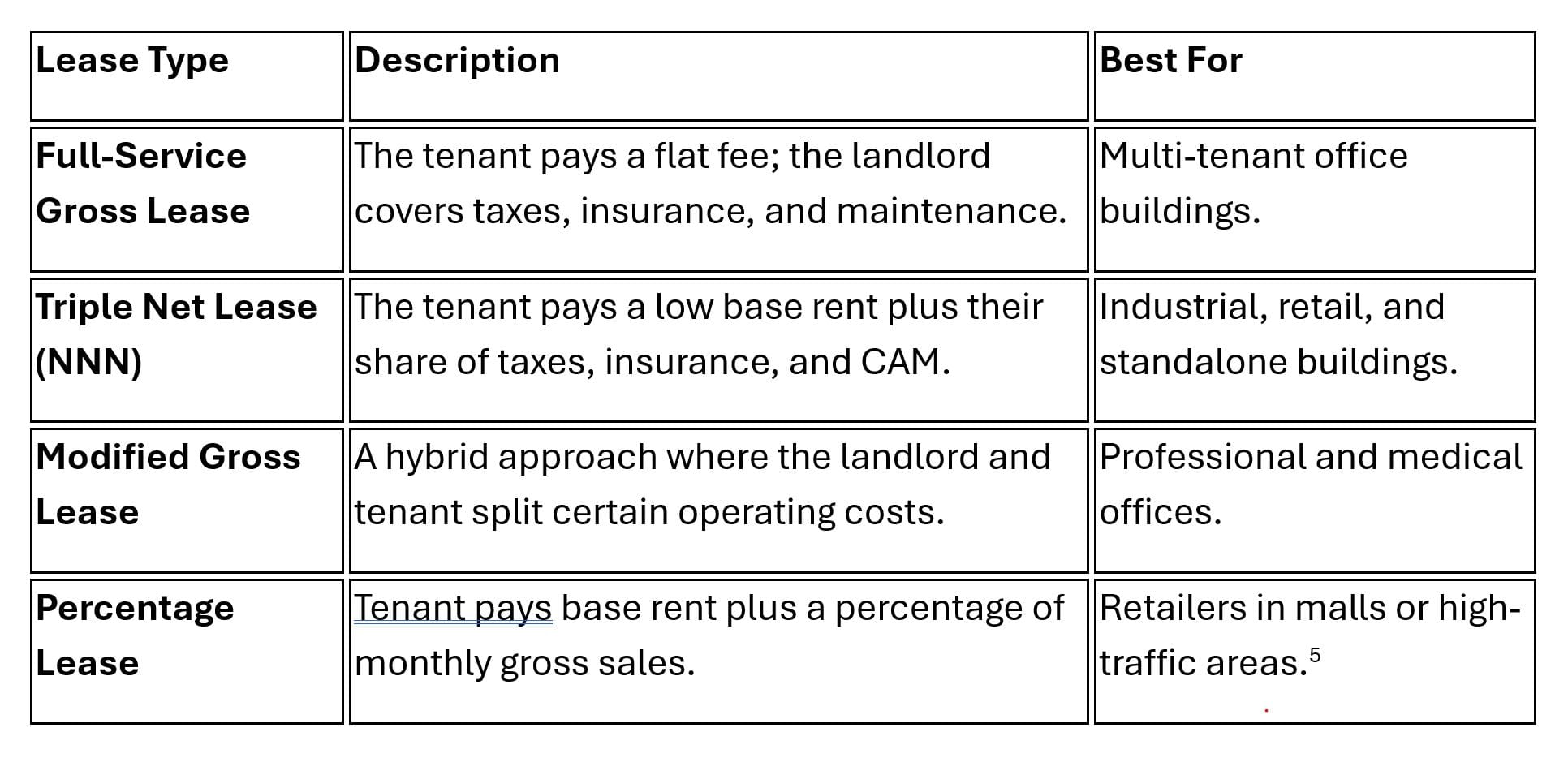
BizRealtyLab Pro Tip: Many NNN leases now include specific clauses regarding energy efficiency and “green” cost-sharing. Make sure you review how utility upgrades are amortized.
5 Essential Considerations Before You Sign a Commercial Property Lease
Now that you’re familiar with the core lease types, let’s take a look at five very important considerations to make before actually leasing commercial property.
1. Zoning and Permitted Use
Never assume your business can operate anywhere. Many local zoning laws have become stricter regarding noise, delivery hours, and environmental impact. Always verify that your “intended use” is explicitly permitted in the lease agreement, so you can avoid any legal pitfalls going forward.
2. Power and Infrastructure
With the rise of AI-driven tools and high-density computing, even small businesses now tend to have higher power requirements. Check if the building’s electrical capacity (amps) can handle your equipment.
3. Tenant Improvement (TI) Allowances
Will the landlord pay to renovate the space? Negotiating a strong TI allowance can save you thousands in upfront capital. In the current market, landlords often provide higher allowances for long-term, creditworthy tenants.
4. Common Area Maintenance (CAM)
CAM charges cover the “extras” — such as landscaping, security, and lobby maintenance. Ask for a “CAM Cap” to ensure these costs don’t spiral out of control due to inflation or unexpected repairs. The more you can define this upfront, the better.
5. Expansion and Renewal Options
Your business might look very different in three years. Ensure your lease includes a “Right of First Refusal” for adjacent spaces and clear renewal terms to protect you from any predatory rent hikes.

The Step-by-Step Process for Leasing Commercial Property
Now let’s go through the actual leasing process itself, step-by-step.
1. Define Your Needs
Calculate your required square footage, adding in a 10–15% buffer for growth.
2. Conduct Market Research
Use platforms like LoopNet to compare market rates for leasing commercial property in your target area.
3. Submit a Letter of Intent (LOI)
Will the landlord pay to renovate the space? Negotiating a strong TI allowance can save you thousands in upfront capital. In the current market, landlords often provide higher allowances for long-term, creditworthy tenants.
4. The Negotiation Phase
This is where you iron out the details. Don’t just focus on rent; look at the “hidden” clauses like sublease rights and termination options.
5. Legal Review and Execution
Always have a commercial real estate attorney review the final contract. Commercial leases do not have the same consumer protections as residential leases.
Avoiding Common Pitfalls
One of the biggest mistakes tenants make is failing to account for “Load Factor.” This is the difference between your usable square footage (the space you actually occupy) and rentable square footage (which includes your share of the lobby, hallways, and elevators). In high-end developments, the load factor can be as high as 15–20%.
Also, be wary of “Holdover” clauses. If you stay one day past your lease expiration without a renewal, some contracts allow landlords to charge 150–200% of your previous rent.
Leasing commercial property in 2026 requires a blend of market savvy and technical foresight. By understanding the different lease structures and focusing on high-value negotiations — like TI allowances and power capacity — you can secure a space that serves as a launchpad for your business success rather than an unfortunate financial burden.